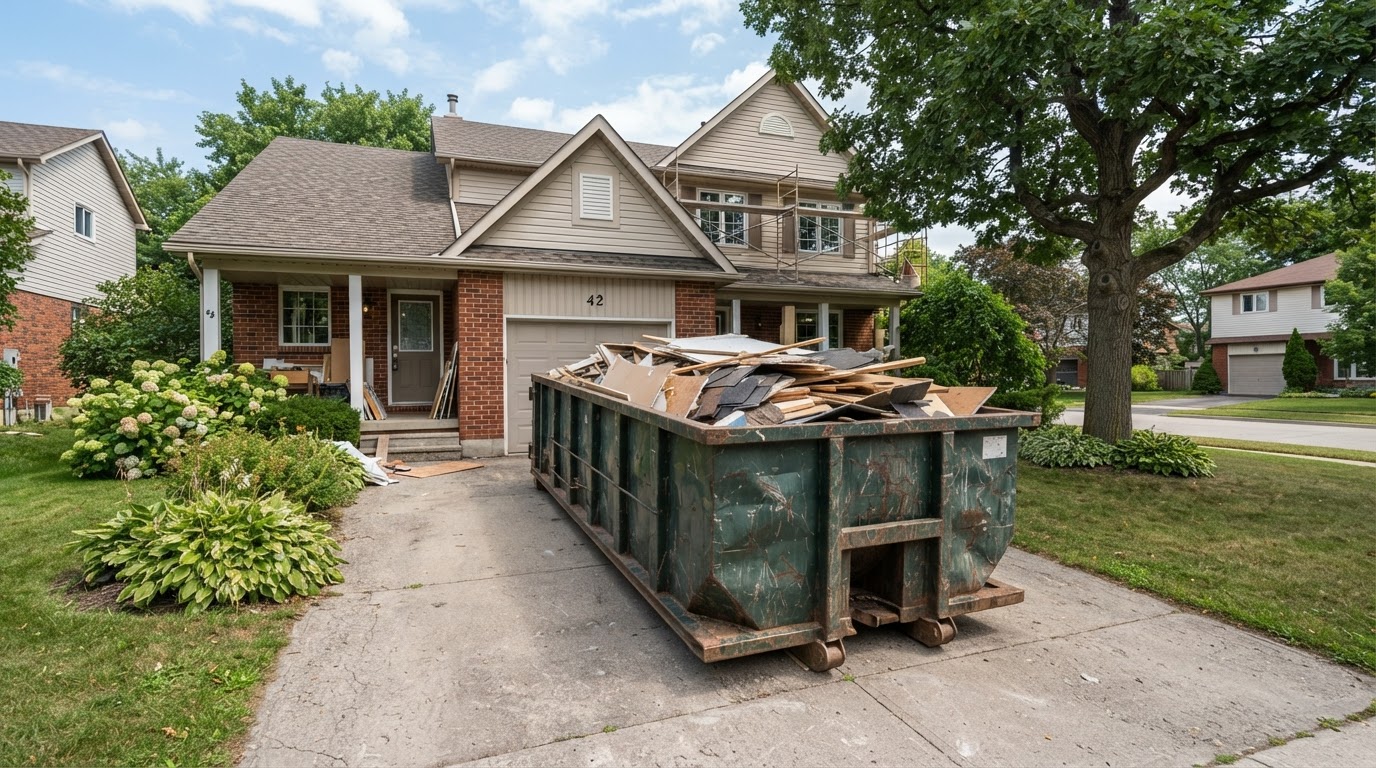
40 Yard Dumpster Rental
A 40 yard dumpster provides substantial roll-off capacity for large construction projects, major renovations, property cleanouts and other jobs generating high volumes of bulky debris.
The largest available container is not automatically the right container. Debris weight, material type, placement space and local equipment availability should all be considered. Dumpster & Porta Potty Pros helps customers check local 40 yard dumpster options based on the actual project.
What Is a 40 Yard Dumpster?
A 40 yard dumpster is a roll-off container with approximately 40 cubic yards of nominal volume. The “40 yard” designation describes container volume.
It does NOT establish one standardized:
- Length
- Width
- Height
- Container design
- Door configuration
- Weight allowance
Actual specifications vary by provider and equipment. In nominal volume, a 40 yard dumpster provides approximately one-third more volume than a 30 yard dumpster, twice the nominal volume of a 20 yard dumpster and four times the nominal volume of a 10 yard dumpster. These comparisons describe volume only. They do NOT mean a 40 yard dumpster has proportionally greater allowable weight. For a broad overview of all roll-off dumpster rental options, see our main rental guide.
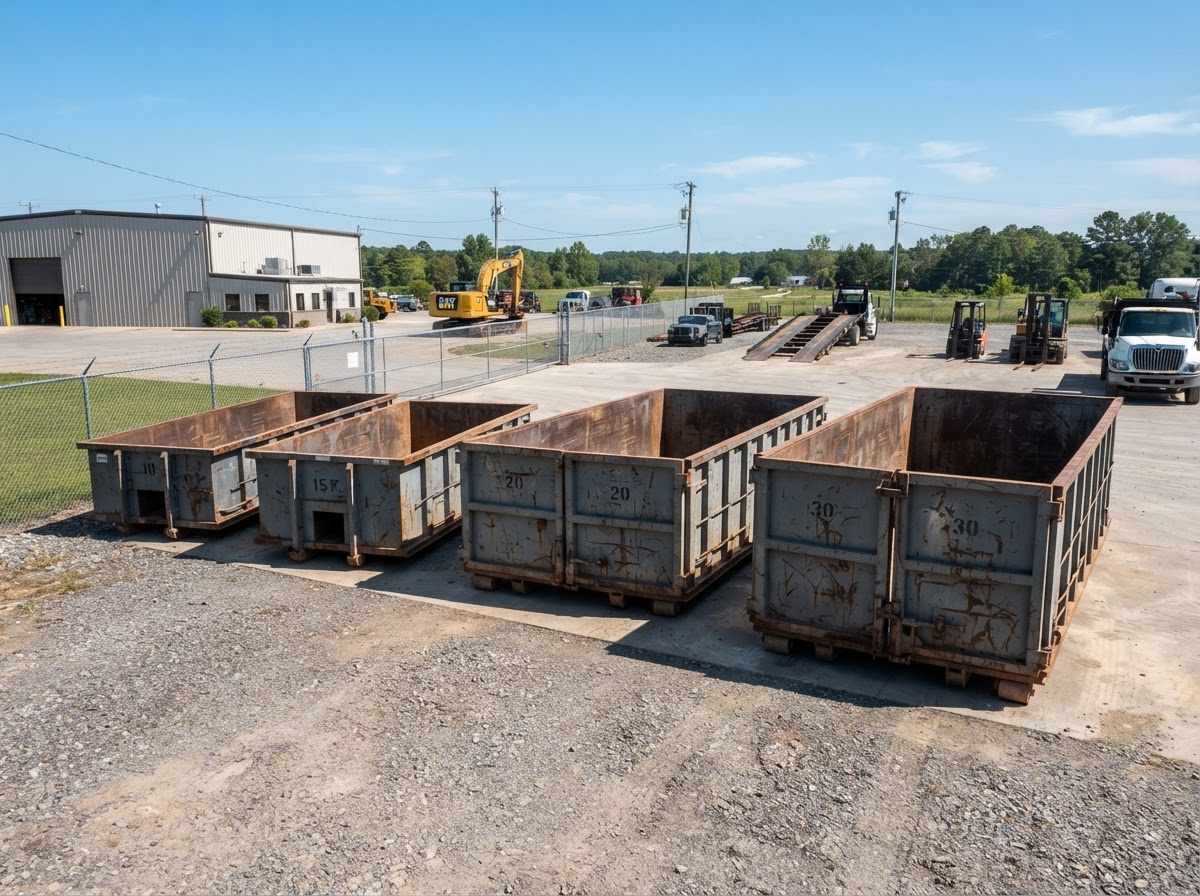
Where Does a 40 Yard Dumpster Fit in the Size Range?
A 40 yard dumpster sits at the high-volume end of the common roll-off size range. Its primary advantage is additional physical capacity for projects generating substantial amounts of bulky material.
Mid-size capacity for moderate cleanouts, remodeling and construction projects.
See our 20 yard guide.
Large capacity for substantial cleanouts, renovations and construction debris.
See our 30 yard guide.
High-volume capacity for large projects generating substantial amounts of bulky debris.
You are here.
Not every provider or market offers 40 yard dumpsters. The largest container should not be selected simply because it provides the most volume.
What Is a 40 Yard Dumpster Good For?
A 40 yard dumpster may be considered when a project is expected to generate a substantial volume of appropriate debris.
Major Construction
Large construction projects can generate significant amounts of packaging, wood, framing, drywall and other appropriate debris.
See our construction dumpster rental guide.
Large Renovations
Major remodeling and property redevelopment projects may generate enough bulky debris to benefit from additional container volume.
Commercial Projects
Commercial renovations, tenant improvements and property projects may generate substantial amounts of appropriate debris.
Large Property Cleanouts
Large-scale property cleanouts involving furniture and bulky household or commercial items may require significant container volume.
Demolition Projects
Certain demolition projects can generate large quantities of bulky debris, although dense materials require separate consideration.
High-Volume Bulky Debris
Projects involving large quantities of relatively bulky material may benefit from a 40 yard container where locally available.
Bulky Debris vs. Heavy Debris
This is one of the most important distinctions when considering a 40 yard dumpster.
Bulky Debris
Bulky debris occupies substantial physical space. Examples may include:
- Furniture
- Wood
- Framing
- Cabinets
- Drywall
- Packaging
- Fixtures
- General construction debris
A high-volume dumpster can be useful when appropriate bulky materials are the primary concern.
Heavy Debris
Dense debris adds substantial weight without necessarily occupying much physical space. Examples include:
- Concrete
- Dirt
- Brick
- Asphalt
- Masonry
- Stone
A large-volume dumpster is NOT automatically appropriate for dense material. See our heavy debris dumpster rental guide.
Can You Fill a 40 Yard Dumpster With Concrete or Dirt?
Do not assume that a 40 yard dumpster can be filled with concrete, dirt, brick, asphalt or other dense material. The available physical volume can greatly exceed the amount of dense material that can safely or contractually be transported.
Depending on the provider and material, heavy debris may require:
- A smaller container
- A dedicated heavy-debris dumpster
- A lower fill level
- A clean load
- Material separation
- Specific weight allowances
- Different disposal arrangements
What Can Go in a 40 Yard Dumpster?
Accepted materials vary by provider, rental agreement and disposal facility. Depending on the rental, appropriate debris may include:
- Household junk
- Furniture
- Wood
- Framing
- Drywall
- Flooring
- Cabinets
- Packaging
- Construction debris
- Remodeling debris
- Certain demolition debris
- Yard debris where accepted
This is not a universal acceptance list. Always disclose the debris type when requesting the rental. Large container volume does not override provider material restrictions.
What Should Not Go in a 40 Yard Dumpster?
Material restrictions vary by provider and disposal facility. Materials that may be prohibited, restricted or require special handling can include:
- Paints
- Solvents
- Fuels
- Chemicals
- Batteries
- Tires
- Certain electronics
- Refrigerant-containing equipment
- Medical waste
- Asbestos-containing materials
- Other hazardous or regulated materials
This is not a complete universal list. Ask the local provider before loading any questionable material.
30 Yard vs. 40 Yard Dumpster
| Planning Factor | 30 Yard | 40 Yard |
|---|---|---|
| Nominal volume | 30 cubic yards | 40 cubic yards |
| General scale | Large | High-volume |
| Renovations | Large projects | Major projects with substantial debris |
| Construction | Significant debris volume | High volumes of bulky debris |
| Cleanouts | Large | Very large / high-volume |
| Placement | Actual footprint varies | Actual footprint varies |
| Heavy debris | Material-specific restrictions | Still material-specific and may require a smaller container |
A 40 yard dumpster provides approximately one-third more nominal volume than a 30 yard dumpster. That additional volume can matter when bulky debris is expected. It does NOT mean a 40 yard container has one-third more allowable weight.
Consider 30 Yard When
- The project is large but defined
- Expected debris should fit comfortably in the available 30 yard container
- A 40 yard container would provide unnecessary volume
- Site conditions favor the locally available 30 yard option
Consider 40 Yard When
- Debris volume is especially high
- Large amounts of bulky material are expected
- Major construction or renovation work is underway
- Reducing container exchanges may be useful
- Site conditions can accommodate the available equipment
Compare 30 yard dumpsters for more detail.
20 Yard vs. 40 Yard Dumpster
A 40 yard dumpster provides twice the nominal volume of a 20 yard dumpster, but these sizes typically serve different project scales.
20 Yard May Fit
- Medium-size cleanouts
- Remodeling
- Moderate construction debris
- Projects with more limited space
40 Yard May Fit
- Large construction projects
- Major renovations
- High-volume property cleanouts
- Projects generating substantial bulky debris
Do not interpret twice the nominal volume as twice the allowable weight. Compare 20 yard dumpsters for more detail.
Compare Dumpster Sizes
The right roll-off depends on the actual debris volume, weight and placement. Explore each size guide to find the container that fits your project.
When Is a 40 Yard Dumpster Too Large?
The largest dumpster can be unnecessary or inappropriate for many projects. Consider a smaller size when:
Moderate Volume
When debris volume is moderate, a 40 yard dumpster may simply provide unnecessary capacity.
Limited Scope
A project that is limited in scope may be handled more efficiently by a smaller container.
Constrained Placement
Constrained placement space may make a smaller locally available container more practical.
Heavy Debris Focus
When heavy debris is the primary material, a smaller container with appropriate weight handling is often more suitable.
Limited Access
Limited local equipment access may favor a different size that can actually be delivered and picked up.
Smaller Works Fine
When a smaller container can handle the project efficiently, there is no need for the largest option.
For smaller projects, see our 10 yard dumpster, 15 yard dumpster, 20 yard dumpster and 30 yard dumpster guides.
40 Yard Dumpster Rental for Construction
Large construction projects can generate substantial amounts of debris throughout multiple phases of work. A 40 yard dumpster may be considered for appropriate materials from:
- New construction
- Major renovation
- Commercial remodeling
- Property redevelopment
- Interior demolition
- Framing work
- Drywall installation and removal
- Packaging and material cleanup
- Contractor cleanup
Large jobs may require:
- Multiple dumpsters
- Container exchanges
- Different containers for different debris
- Separate heavy-debris loads
See our construction dumpster rental guide.
40 Yard Dumpsters for Demolition Debris
Demolition projects can produce both bulky and dense material. That distinction is critical.
Bulky Demolition Debris
Materials such as wood, framing and certain interior debris may consume substantial volume.
Dense Demolition Debris
Concrete, masonry, brick and similar materials may reach weight restrictions long before the container is physically full. Depending on the project, separate containers may be appropriate for different debris streams. Do not imply that a 40 yard dumpster should be used for all demolition debris simply because the project is large. See our heavy debris dumpster rental guide.
40 Yard Dumpster Rental for Large Cleanouts
High-volume cleanouts can generate substantial amounts of bulky material. Possible applications may include:
- Large property cleanouts
- Estate-related cleanup
- Commercial property cleanup
- Furniture-heavy cleanouts
- Major moving cleanouts
- Property redevelopment
- Large decluttering projects
Do not claim that a 40 yard dumpster will hold the contents of a particular size home or building. The amount of material varies dramatically. See our residential dumpster rental guide where appropriate.
How to Load a 40 Yard Dumpster
Plan the Load
Identify bulky materials and dense materials before loading.
Use the Door Where Available
A walk-in door can make loading appropriate bulky debris easier. Follow provider instructions.
Break Down Bulky Items
Where appropriate, breaking down furniture, cabinets and similar items can reduce unused air space.
Distribute Material
Where practical, distribute debris through the container.
Watch Weight
Do not treat remaining physical volume as permission to continue loading dense debris.
Stay Below the Fill Line
Material must remain within the provider-designated loading level.
Secure the Container
If the dumpster has a door, follow provider instructions so it can be properly closed before pickup.
Planning Placement for a 40 Yard Dumpster
Large roll-off containers require careful site planning. Consider:
- Available placement area
- Actual container dimensions
- Delivery-truck access
- Surface condition
- Slope
- Gates
- Parked vehicles
- Overhead wires
- Tree branches
- Construction equipment
- Material staging
- Pickup and exchange access
Actual equipment varies; do not rely on universal container dimensions or truck-clearance requirements. Public-street or right-of-way placement may require local permission or permits.
Can a 40 Yard Dumpster Go in a Driveway?
Whether a 40 yard dumpster can be placed in a driveway depends on the actual container, driveway and delivery conditions. Consider:
- Available driveway area
- Surface condition
- Slope
- Garage access
- Vehicle parking
- Gates
- Overhead clearance
- Truck maneuvering
- Pickup access
Do not assume that every residential driveway can accommodate a large roll-off. Confirm the actual locally available container and delivery requirements before planning placement. Discuss surface concerns and available protection options with the provider. Do not guarantee protection against driveway damage.
Planning Temporary Services on a Large Jobsite
Large construction projects may have multiple temporary services operating at the same time. These may include:
- Roll-off dumpsters
- Portable toilets
- Handwashing stations
- Restroom trailers
- Storage containers
- Material staging
- Temporary fencing
- Heavy equipment
- Worker parking
Plan the site so each service remains accessible. Dumpster trucks need access for delivery, pickup and exchanges. Portable sanitation equipment needs continued access for cleaning and servicing. See our construction porta potty rental, handwashing station rental and long-term porta potty rental guides.
Dumpster & Porta Potty Rentals for Large Projects
Longer construction and commercial projects may require both debris removal and temporary restroom access. When coordinating both services:
- Maintain dumpster delivery access
- Maintain dumpster pickup and exchange access
- Keep porta potty service routes open
- Avoid blocking gates
- Account for material staging
- Account for equipment movement
- Consider future construction phases
See our construction dumpster rental, construction porta potty rental and long-term porta potty rental guides.
What Affects 40 Yard Dumpster Rental Cost?
Location
Local market and disposal conditions vary.
Debris Type
Different materials involve different disposal requirements.
Weight
Included weight and additional charges depend on the rental agreement.
Rental Period
Rental duration and extensions can affect total cost.
Delivery & Pickup
Service distance and site conditions can affect pricing.
Disposal Costs
Landfill, transfer and processing fees vary by market.
Container Exchanges
Large projects may require one or more exchanges.
The largest dumpster is not automatically the least expensive way to handle a project. The appropriate container strategy depends on debris volume, weight, material and service requirements.
What to Know Before Renting a 40 Yard Dumpster
Be ready to provide:
For a large project, describe the debris and project scope rather than simply requesting the largest available dumpster.
How 40 Yard Dumpster Rental Works
Describe the Project
Provide the location, project scope, debris type and approximate amount.
Confirm the Container Strategy
Determine whether a 40 yard dumpster is appropriate or whether a 30 yard, smaller container or multiple-container approach better fits the project.
Confirm Local Details
The provider confirms available equipment, material rules, weight terms, pricing, delivery and rental period.
Prepare the Site
Keep the agreed placement area and service route accessible for delivery, pickup and exchanges.
Find 40 Yard Dumpster Rental Near You
40 yard dumpsters may not be available in every market. Actual dimensions, weight allowances, material policies, rental terms and pricing vary by local provider. Use our location directory to find the closest service area and check available large roll-off dumpster options.
40 Yard Dumpster Rental FAQs
Common questions about 40 yard dumpsters, sizing, weight, placement and rental planning.
Check 40 Yard Dumpster Availability
Tell us where the project is located, what material you are removing and approximately how much debris you expect. Local 40 yard dumpster availability, specifications, material rules and pricing can then be confirmed.
Call (888) 524-7418