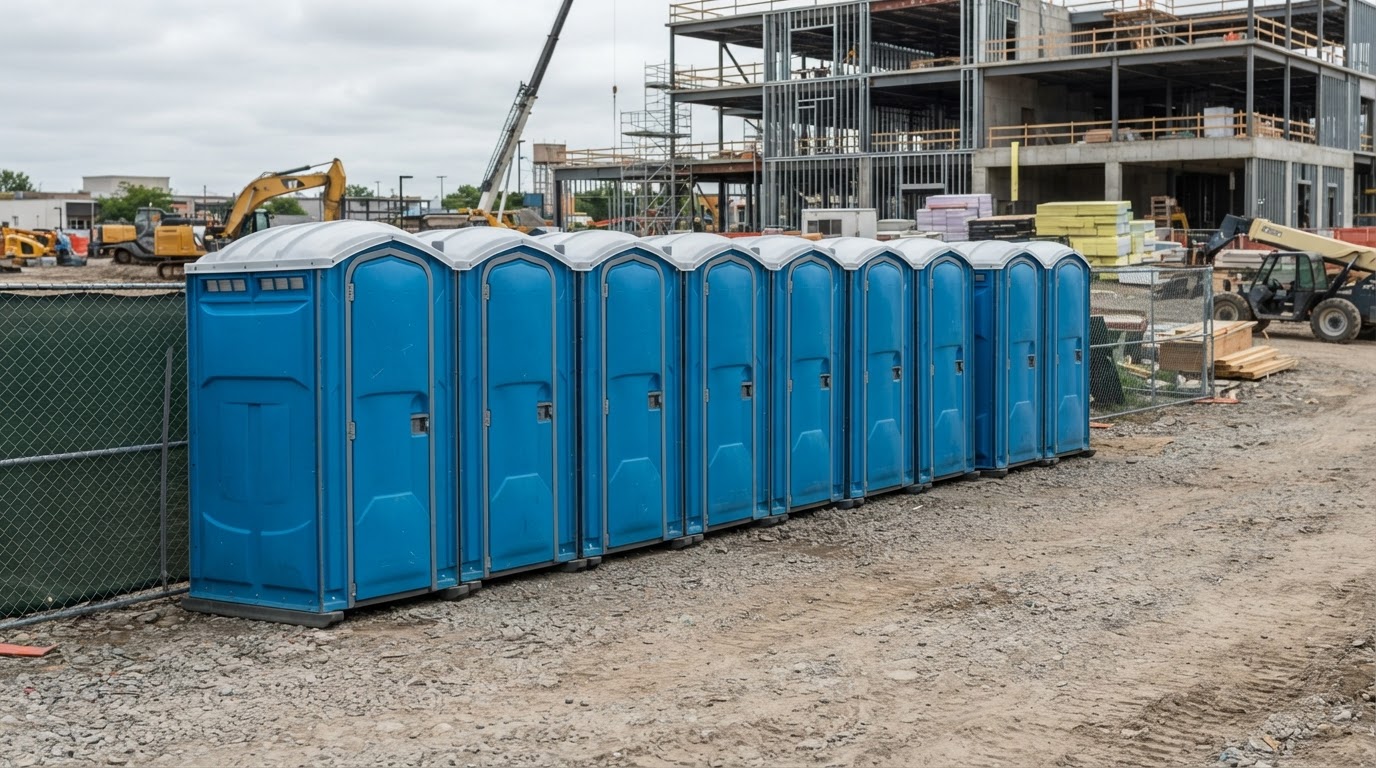
Construction Porta Potty Rental
Construction sites, renovations and long-term projects may need temporary restroom facilities before permanent plumbing is available or while existing facilities are out of service.
Dumpster & Porta Potty Pros helps customers check local options for construction porta potties, jobsite toilets, handwashing stations and recurring portable restroom service.
Portable Toilets for Construction Sites & Jobsites
A construction Porta Potty Rental is a portable restroom used to provide temporary sanitation for workers at jobsites where permanent restroom facilities are unavailable, inconvenient or not yet operational.
Construction portable toilets may be used during:
- New construction
- Home remodeling
- Commercial renovations
- Tenant buildouts
- Roofing projects
- Demolition
- Utility work
- Road and infrastructure projects
- Property redevelopment
- Industrial projects
- Long-term maintenance work
Unlike a one-day event rental, a jobsite portable toilet may remain at the property for weeks or months and require recurring service throughout the project. For ongoing and extended rentals, see our long-term rental guide.
The appropriate setup depends on crew size, project duration, site layout, service access and local availability.
How Construction Porta Potty Service Works
Long-term construction rentals involve more than simply delivering a portable toilet. The unit also needs to remain usable and accessible throughout the project.
Delivery & Placement
The portable toilet is delivered to an agreed location with suitable ground conditions and access for the delivery vehicle.
Pump-Out
Waste is removed from the holding tank during scheduled servicing.
Cleaning & Restocking
Depending on the service agreement, recurring service may include cleaning the unit and replenishing supplies such as toilet paper.
Continued Service Access
The service vehicle needs continued access to the portable toilet. Construction materials, dumpsters, equipment, gates and parked vehicles should not block the servicing route.
Service schedules vary by provider, project and local requirements. Weekly service is common for ongoing construction rentals, but the actual schedule should always be confirmed when arranging the rental.
Construction Projects That May Need Portable Toilets
Home Remodeling
Kitchen additions, bathroom renovations, whole-house remodeling and other residential projects may temporarily limit access to household plumbing or create restroom needs for crews working outside the home.
Commercial Buildouts
Office, retail, restaurant, warehouse and tenant-improvement projects may require temporary worker sanitation while permanent facilities are under construction or unavailable.
New Construction
Portable toilets can provide restroom access from early site work through later phases of construction before permanent plumbing becomes operational.
Roofing
Roofing crews may need convenient restroom access during residential, commercial and multifamily roofing projects.
Demolition
Demolition and major redevelopment projects may require both temporary sanitation and debris-removal planning.
Industrial & Long-Term Projects
Industrial properties, warehouses, infrastructure work and extended commercial projects may require portable toilets with recurring service for weeks or months.
How Many Porta Potties Does a Construction Site Need?
There is no single quantity that works for every construction project.
The number of portable toilets may depend on:
- Number of workers
- Number of shifts
- Workday length
- Project duration
- Existing permanent restrooms
- Workforce changes during different project phases
- Service frequency
- Site layout
- Applicable jobsite requirements
A small residential remodeling crew may have very different sanitation needs from a commercial construction project with multiple trades and shifts.
Where Should a Construction Porta Potty Be Placed?
Placement should make the restroom convenient for workers while keeping it accessible for delivery and recurring service.
Stable Surface
Choose a reasonably level and stable location where the unit can remain upright and usable.
Service-Truck Access
The sanitation service vehicle needs a practical route to reach the unit for pump-out and recurring service.
Worker Access
The restroom should be reasonably accessible to workers without interfering with active construction areas.
Gates & Fences
If the unit is behind a gate or construction fence, confirm how the service provider will gain access.
Construction Traffic
Avoid locations where parked vehicles, heavy equipment, material deliveries or staging are likely to block the restroom.
Changing Jobsite Conditions
Long projects change over time. A unit may need to be relocated as excavation, framing, paving, landscaping or other project phases change site access.
Public property, streets and rights-of-way may have local placement or permit requirements. Confirm local rules before placing rental equipment outside private property.
Portable Sanitation Options for Construction Sites
Standard Construction Porta Potty
A basic jobsite portable toilet is the most common temporary restroom option for construction crews.
- Privacy enclosure
- Holding tank
- Toilet seat
- Ventilation
- Toilet paper
- Urinal on some units
See our Standard Porta Potty Rental guide for basic portable toilet features and servicing.
ADA-Accessible Portable Toilet
Larger accessible units may provide:
- Wider entry
- Ground-level access
- Grab bars
- Additional interior maneuvering space
See our ADA Porta Potty Rental guide for accessible jobsite restroom planning.
Providing an accessible portable toilet alone does not automatically make an entire construction site ADA compliant. Routes, surfaces, placement and other accessibility requirements also matter.
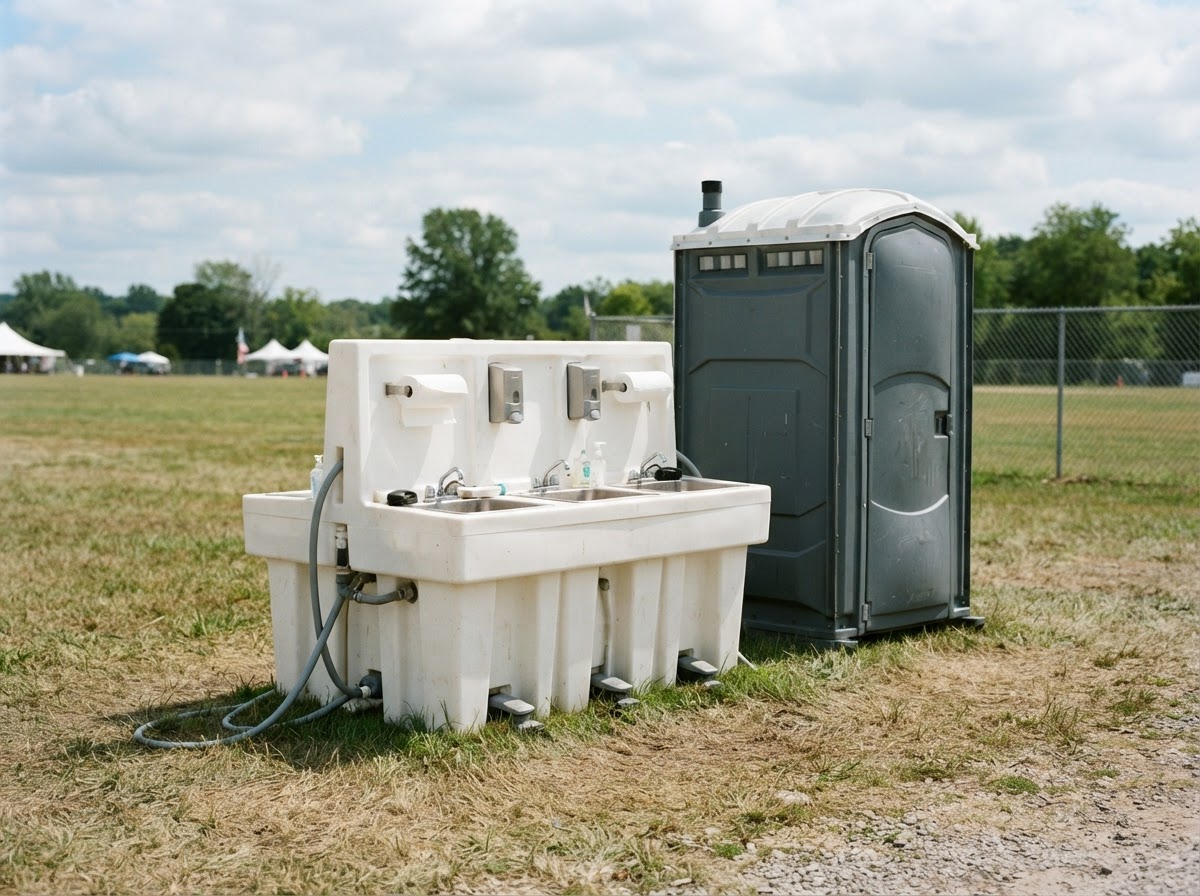
Portable Handwashing Station
Standalone handwashing stations may be used where workers need access to handwashing without permanent sinks.
- Freshwater storage
- Wastewater storage
- Soap
- Paper towels
- Foot-operated pumps
See Handwashing Station Rental for standalone handwash setup and servicing.
Long-Term Portable Toilet Rental
Projects lasting several weeks or months may require recurring portable toilet service for the duration of construction.
- Crew size
- Project duration
- Unit quantity
- Placement
- Service frequency
- Site access
- Changes in workforce
Need a Dumpster and Porta Potty for the Same Project?
Construction, demolition, remodeling and commercial buildouts often create two temporary site-service needs at the same time: debris removal and worker sanitation.
Planning the dumpster and portable toilet together can help prevent placement conflicts. For example, the dumpster should not block the sanitation service vehicle from reaching the portable toilet, and the portable toilet should not interfere with dumpster delivery, swap-outs, material staging or equipment access.
Common combined-use projects include:
- New construction
- Commercial renovations
- Tenant buildouts
- Major home remodeling
- Demolition
- Roofing
- Property redevelopment
- Long-term construction projects
What to Know Before Ordering a Construction Porta Potty
Before requesting a rental, be ready to provide:
Providing accurate project information helps the local provider determine what equipment and service options are available for the site.
Construction Porta Potty Terms You'll Hear
Jobsite Toilet
Another common term for a portable toilet used on a construction site.
Pump-Out
Removal of waste from the portable toilet holding tank.
Recurring Service
Scheduled visits during a longer rental period for waste removal, cleaning and supply replenishment according to the rental agreement.
Service Route
The provider's recurring schedule for servicing portable restrooms within an area.
Service-Truck Access
The path the sanitation vehicle needs to reach the portable toilet for servicing.
Relocation
Moving a portable toilet to another part of the jobsite as construction progresses.
Long-Term Rental
A portable toilet rental lasting for an extended project rather than a single event or short-term use.
How to Rent a Construction Porta Potty
Tell Us About the Project
Provide the location, project type, crew size, start date and expected duration.
Choose the Setup
Discuss standard units, accessible units, handwashing stations and the approximate quantity needed.
Confirm Local Availability
Available equipment, pricing, delivery timing and recurring service details are confirmed for the local market.
Keep Service Access Clear
After delivery, maintain access to the portable toilet for scheduled servicing throughout the project.
Find Construction Porta Potty Rental Near You
Portable toilet equipment, delivery schedules, servicing and pricing vary by market. Use our location directory to find the closest service area and check construction porta potty availability for your project.
Construction Porta Potty Rental FAQs
Common questions about construction porta potty service, quantity, placement, handwashing and accessible units.
Check Construction Porta Potty Availability
Tell us where the project is located, when work begins, how many people are expected on site and how long the project may last. Local construction portable toilet options, servicing and pricing can then be confirmed.
Call (888) 524-7418